By MaryBeth Matzek | Photography by Shanna Wolf
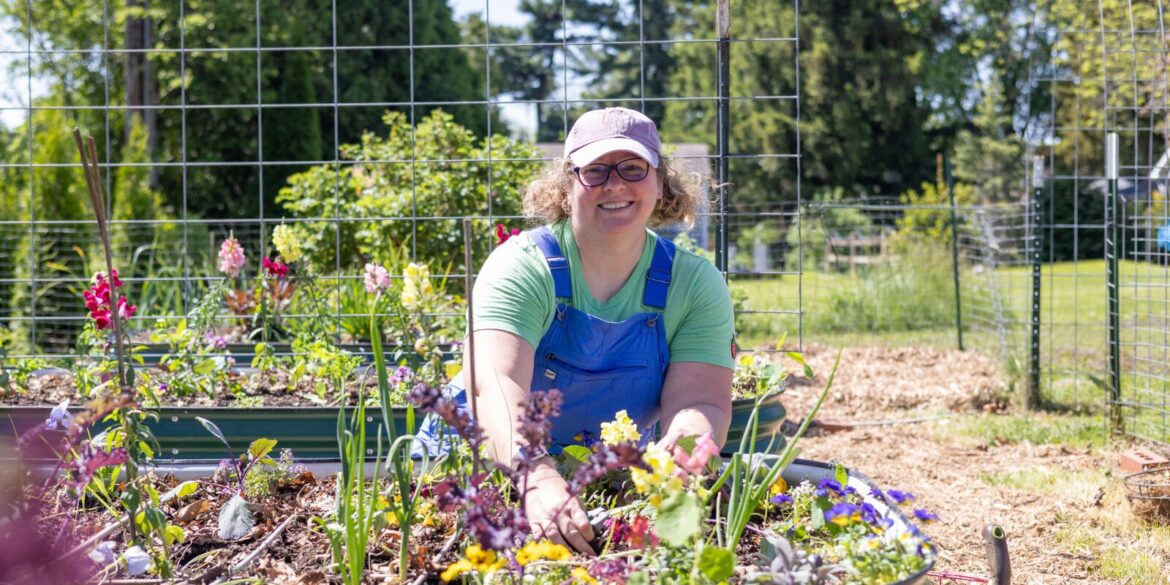
Jessica Burda Leslie wants gardeners to expand their thinking — and “Most people think the growing season is from June through early September, but with the right plants, some preparation and frost protection, you can start in mid to late March or early April — and keep going through November,” says Leslie, designer, garden coach and founder of Burda Growing Better. “We have cool seasons in the spring and the fall, and then a warm season in the middle.”
There are a number of kitchen garden veggies, such as snap peas, spinach, radishes, cabbage, lettuce, onions, and herbs like parsley and cilantro that thrive in cool weather, says Leslie, who is also a volunteer master gardener with the University of Wisconsin Extension. She says gardeners can get a jumpstart to the season by purchasing fast-growing seeds or started seedlings.
Other plants, such as tomatoes, peppers and herbs like basil, prefer hot weather, and thrive best in the warmer months of June, July and August.
“You really need to look at your plants and see what temperatures they do best in,” explains Leslie. “Read and see what the temperature needs to be averaging overnight before you plant them outside.”
Monitoring how much water you give plants is also essential. Be sure to check the plant’s label to see how much water it requires and strive to get as close as possible to that amount, Leslie says.
“Overwatering and underwatering are common mistakes. Make sure you’re learning the plant’s water needs and following the recommendations,” she says.
Leslie says beginning gardeners can become confused about what to plant when. She advises gardeners to visit local nurseries when buying plants to see what the staff recommends.
“They are the ones growing in this area and know the local growing season and what thrives when. Another place to ask questions is at the farmers markets, especially if people are selling seedlings,” Leslie says.
Another easy way to enhance your kitchen garden’s life is by surrounding it with native, pollinator-friendly flowers and plants, which Leslie says will help attract local bees and butterflies. As a bonus, you’ll support their growing season, too.
KEEPING PLANTS WARM
When temperatures begin to dip in the spring and fall, there are multiple ways for gardeners to extend their growing season, Leslie says.
An easy way is to throw a sheet over the plants, which creates a little balloon that keeps the warm air in during cooler nights in the spring and fall.
“You can also place other pots over the top of the plants to help them stay warm. If the plants or flowers are in a container, you can bring it in your garage or even into your house overnight to help them stay warm,” she says.
KEEPING IT SMALL
Leslie says you don’t need a lot of space to have a thriving flower and vegetable garden.
“Almost anything you can do in your yard, you can do in a smaller space on your patio or balcony,” she says.
It takes some creativity, such as using vertical structures in addition to traditional containers, but it can be done, Leslie says.
“You first need to think about what you want to eat from your garden. There’s a lot of opportunity. Do you want herbs that you pick off and toss into your recipes or are you looking for greens for salads?” she says.
Water and light can be a challenge with smaller spaces, but Leslie says there are some stylish light sources that can be used to augment natural lighting. With watering, “feel the soil to see if it feels like it needs moisture,” she says.