
By Nikki Kallio | Photo by UW Health/John Maniaci
CANINE HEALTH AND MEDICAL PALS AND CARING CANINES
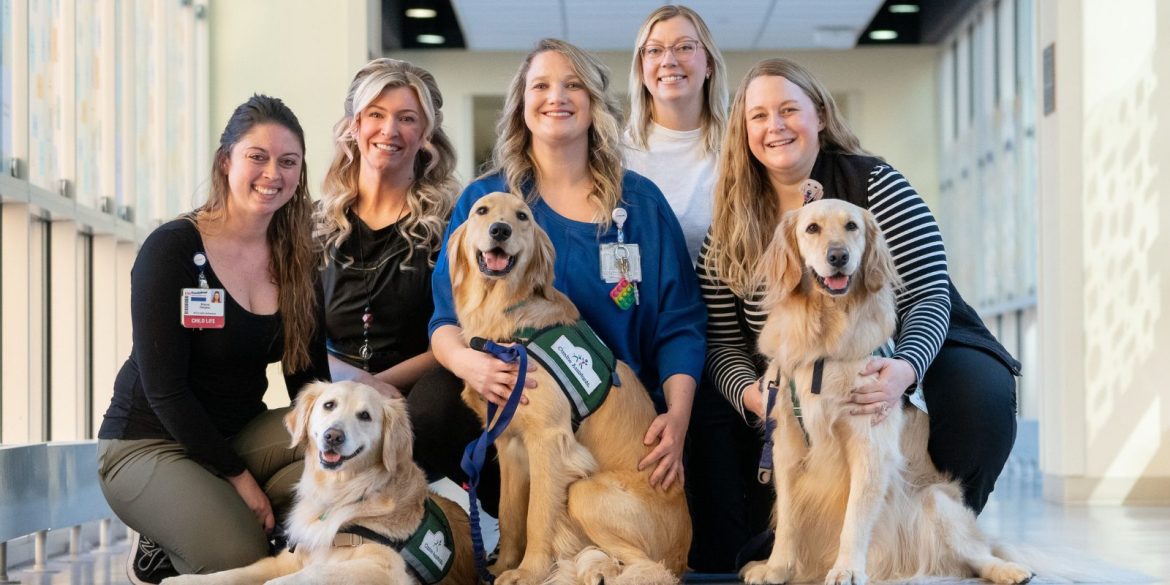
UW Health operates both of these programs at the American Family Children’s Hospital. Caring Canines is made up of community volunteers and trained/evaluated pet dogs. Canine Health and Medical Pals, or CHAMPs, is the hospital’s facility dog program and includes five specially trained canines and their handlers, who are part of the hospital staff. Their first dog, Kiko, joined in 2021. The dogs help pediatric patients and their families cope with stressful medical situations.
DOGS ON CALL
This all-volunteer animal therapy organization has about 100 therapy handler and animal teams that visit nursing homes, assisted living facilities, hospitals, hospices, schools and libraries, as well as the Columbia Correctional Institution and the Dane County Regional Airport. The organization offers courses for new handlers to become a registered Pet Partner, and pets can include other animals like cats, pigs and miniature horses.
DOG TRAINING ELITE
This company’s professional service dog instruction program customizes training toward specific medical and psychological needs, including autism, PTSD, mobility support and medical alerts (such as for epileptic seizures). It also trains dogs for general pet therapy and emotional support.
GUARDIAN WHISKERS
Launched by Dr. Katarina Luther, DVM, this organization builds on the power of pet interaction to improve physical, mental and social wellbeing. The nonprofit currently operates the Book Buddies Reading Program, which gives kids the chance to practice reading to registered therapy dogs.
SSM HEALTH PET THERAPY PROGRAM
Patients at SSM Health hospitals may see volunteer pet therapy teams with dogs of all sizes. To volunteer with the program, handlers must complete a pet therapy training course and become certified through a pet therapy organization.
UW-MADISON POLICE DEPARTMENT (UWPD) THERAPY DOG PROGRAM & MADISON POLICE DEPARTMENT’S (MPD) K9 UNIT
UWPD’s nonprofit Therapy Dog Program launched in 2023 to provide comfort during times of crisis. Its two dogs, K9 Dusty and K9 Hoagie, are specially trained to be comfortable in emergency situations where there might be loud noises, bright lights and chaotic settings. The dogs are used by community officers, as well as internally to help officers and staff cope with trauma and stress.
MPD’s K9 Unit is staffed with service dogs (like K9 Charlie, above) that help officers with narcotics detection and patrol work. UWPD has three K9 teams that assist with explosives detection, event security and human tracking.
WISCONSIN ACADEMY FOR GRADUATE SERVICE DOGS
The nonprofit Wisconsin Academy for Graduate Service Dogs (WAGS) assists people to live with greater independence and improve quality of life for people with disabilities. The organization has placed more than 200 service dogs with people and also has four clinical therapy dogs supporting students in schools.
Q&A
What do service and therapy dogs do, and what’s the difference between them?
Service dogs receive specialized training to assist people who have medical, neurological or psychological needs, such as mobility issues, autism or PTSD. Some service dogs are trained to provide emotional support in clinical settings. Therapy dogs can also provide emotional support, but may have less formal training.
How are dogs selected to become a service or therapy dog?
Service dogs are often chosen for their temperament, loyalty and trainability. Therapy dogs are canines with attitudes suitable to interacting with strangers and unfamiliar situations, they have calm demeanors and they must pass a behavioral assessment. Clinical therapy dogs have received additional specialized training.
How are these pups trained?
Some service dog organizations, like the nonprofit Wisconsin Academy for Graduate Service Dogs (WAGS), often start by placing puppies with volunteers who begin with basic skills and socialization before the dogs move on to the next phase of training with the handler.
UW Health’s Canine Health and Medical Pals (CHAMPs) dogs spend time as puppies in the hospital to get them used to noises and activity they may encounter.
How do these dogs help people?
Therapy dogs have been shown to reduce anxiety and even blood pressure. Service dogs can assist their handlers with specific tasks like opening doors or alerting them to a medical crisis.