By Maura Keller
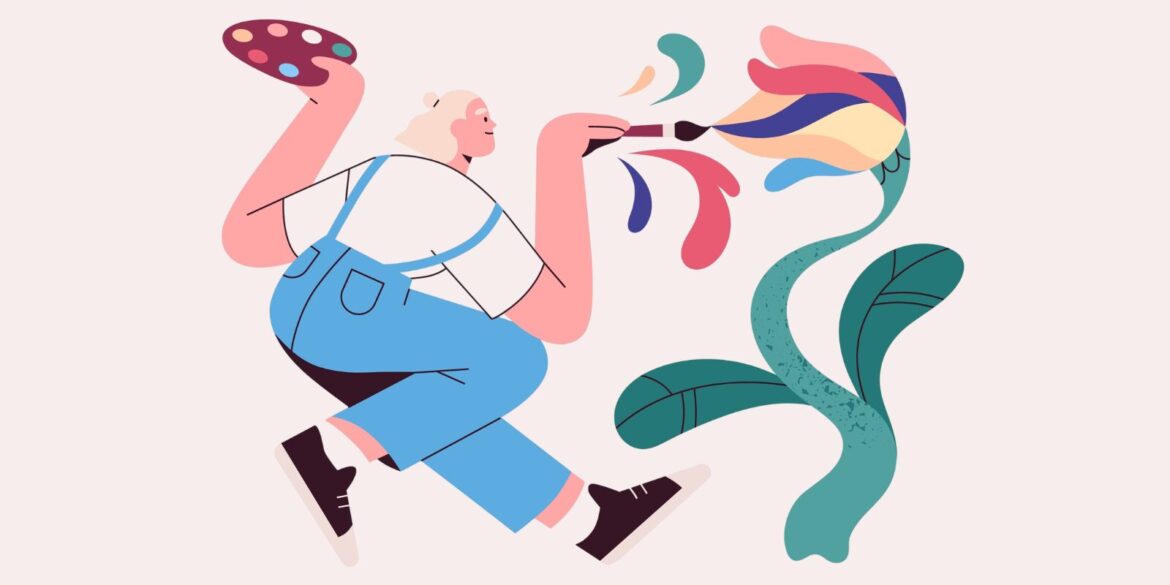
For many people, painting or drawing is a creative outlet. In a clinical setting, however, these same activities can be employed as structured, evidence-based tools for healing.
Kelly Toltzien, board-certified art therapist and licensed professional counselor at Wildflower Expressive Arts Therapies, and psychotherapist Laura Teoli of Golden Vibes Counseling Center, use art and creative processes to help clients deal with experiences that are often difficult — or impossible — to put into words.
Both say that art therapy is more than casual creativity. Art therapists are highly trained professionals requiring a master’s degree that blends psychotherapy theory with hands-on art practice, followed by extensive supervised clinical experience and, often, board certification and licensure.
WHAT MAKES ART THERAPY DIFFERENT
Art therapy is grounded in a therapeutic relationship and guided by clinical intent.
“Art therapy is the purposive use of art media, materials and creative processes within the context of a therapeutic relationship,” Teoli explains. Therapists carefully select materials and directives — such as drawing, collage or sculpting — based on each client’s emotional and cognitive needs.
This approach is especially helpful when talk therapy reaches its limits.
“Sometimes our experiences are stored as sensations, images or a felt sense rather than language,” Teoli says. “Art therapy helps access and process that information in different ways.”
Toltzien adds that creating something tangible allows clients to externalize internal experiences, making them easier to approach and understand. As she explains, art therapy engages both the brain and body. From a psychological standpoint, learning involves action, processing and integration — steps that are naturally embedded in the creative process. Clients make something, reflect on it and incorporate new insights into their personal narrative.
It also supports emotional regulation. Working with a variety of materials, such as clay or paint, can calm the nervous system and ground the body. Just as importantly, the process creates psychological distance. By placing an image outside themselves, clients can explore difficult emotions without becoming overwhelmed.
There is also a deeper human element. Creativity has long been tied to communication and healing. Teoli notes that creating can restore a sense of agency and possibility —especially for those who feel stuck or overwhelmed.
WHAT HAPPENS IN A SESSION
Art therapy sessions are structured but flexible. In trauma-informed work, Toltzien may have clients choose materials — such as paper size, texture and color — to create a sense of safety before visually representing an experience. The artwork then becomes a focal point for discussion.
Teoli uses targeted directives tailored to specific challenges. For example, she may ask clients with eating disorders to draw themselves alongside their disorder, revealing how it functions in their lives.
“One person might depict it as a comforting blanket, another as a critical figure,” she says. These images reveal how the disorder functions in their life, which guides the next steps in treatment.
For anxiety, she often begins with abstract shapes and colors, helping clients observe and engage with their internal state without overanalyzing it.
WHO BENEFITS
Art therapy is used for children up to adults who are dealing with trauma or anxiety, and older adults navigating illness or cognitive changes. It’s particularly valuable for those who struggle to articulate emotions or feel stuck in traditional talk therapy.
Importantly, artistic skill is irrelevant.
“You don’t need to be creative or good at art,” Toltzien says. Teoli agrees: The goal is not to produce something beautiful, but to engage in a process that fosters insight and change.
In the end, art therapy works because it gives people another way in — another path to understanding themselves. And for many, that path is the one that finally leads forward.
WRITING AS THERAPY
Writing can also serve as a powerful therapeutic tool, helping individuals process emotions, reduce stress, and gain clarity through honest self-expression.
Founded by Kim Anderson of Fort Atkinson, The Unapologetic Pen (theunapologeticpen.com) offers Unapologetic Writing Journeys to empower writers to embrace their authentic voice without hesitation or self-censorship. The platform blends coaching, community and practical tools to help writers move past fear, perfectionism and doubt. Through guided exercises, participants learn to write with clarity, confidence and purpose. Whether emerging or experienced, writers are encouraged to take creative risks and trust their instincts. The result is work that feels bold, personal and real — reflecting not just polished skill, but the courage to be fully seen on the page.