By Marybeth Matzek | Photography By Hillary Schave
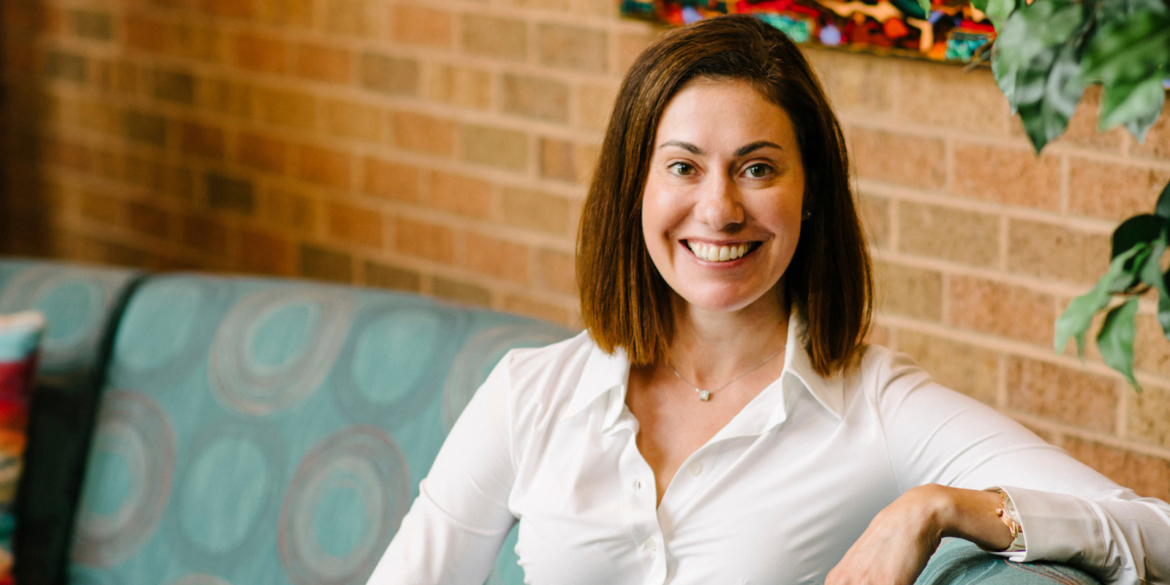
Dr. Jacqueline Gerhart is in a unique position to not only be familiar with the back end of Epic Systems’ electronic record software, but is an end user with her patients, too.
As Epic’s chief medical officer, she helps ensure the company’s software supports physicians in delivering efficient, patient-centered care. As an urgent care physician at UW Health, she interacts with Epic as she treats patients.
For Dr. Gerhart, her dual roles really came together during COVID. She was working in urgent care, and if a patient had a positive test, she had to fill out three separate paper forms, which repeated a lot of the same information and took about eight minutes.
“I took photos of the three documents and brought them back to Epic and said, ‘Can you figure out a way I can do this electronically to save time?’ and the team here did that.”
Dr. Gerhart was studying biotechnology as an undergrad at UW-Madison when she decided to go to medical school.
She enjoyed the science aspect of her major, but missed interacting with people. While attending the Mayo Clinic Alix School of Medicine, she fell in love with family medicine.
“I loved the relationships you have with families throughout their lives — from birth to grave — and I loved delivering babies,” Dr. Gerhart says. “When babies were born, those were the best days.”
She wasn’t looking for a new job, but was curious when she saw a job listing for Epic that simply said physician.
“There was no description. I loved what I did and I wasn’t burned out. I just liked the idea of how I could have an impact of helping more people,” says Dr. Gerhart, who works in urgent care on nights, weekends and holidays as time allows.
At Epic, Dr. Gerhart’s duties run the gamut from deeply understanding how the electronic medical records software works to interacting with healthcare executives across the country to better understand the problems they are trying to solve.
“We want to make sure we keep innovating,” she says.
Dr. Gerhart calls Epic “a research shop,” and she also works with the research and development team “working across all applications to make sure everything’s working well together” and contributing as new software is developed.
As for healthcare’s future, Dr. Gerhart sees even further integration with technology, especially AI. She says doctors write a lot of notes and deal with prior authorizations that could be made easier with AI.
“I think AI will help reduce the friction of the administration burden and will help me become a better physician,” she says. “I think we have the opportunity right now in healthcare, through using technology, to help patients have better diagnoses, better cures and just live better lives.”