
By Katie Vaughn
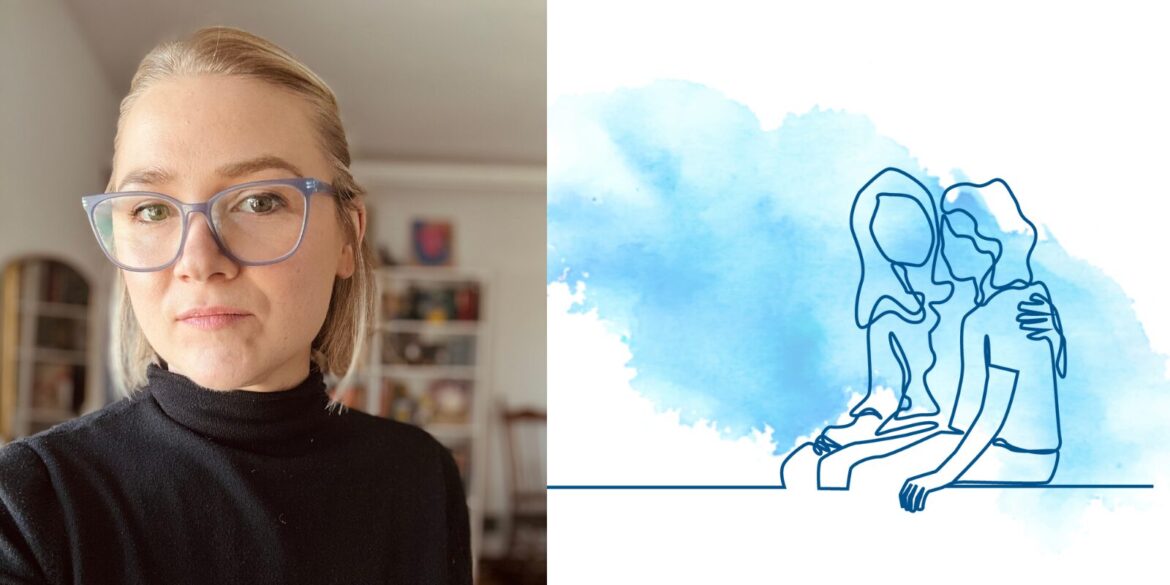
When Meghan Allynn Johnson received the call that her father, who suffered from dementia, was actively dying, she rushed to his side. Although he was unable to talk, Johnson found ways to communicate with and comfort him until he passed.
“The profoundness of that experience completely changed me,” says Johnson, an artist who was running a gallery in New York City at the time. “I was able to hold the grief and the beauty simultaneously.”
And when, just 18 months later, Johnson sat alongside her mother as she died from breast cancer, she realized she felt called to deathwork.
Johnson enrolled in a death midwifery program — learning both the logistical and community aspects of end-of-life care — and formed the Madison Death Collective with artist and grief worker Taylor Franklin. A community resource for death and grief care, the group hosts events and workshops, makes and sells its own grief-centered products, opens conversations and fosters connections.
Johnson focuses on promoting folk and fringe death care practices, and seeks to learn from past traditions to find empowering practices for today.
“How can we, as a community, and humanity reintegrate death, dying and grief into our lives?” she asks.
And Johnson believes artists are uniquely positioned to lead the way.
“Artists can break rules, be on the fringes and tackle difficult subject matter,” she says.
But, she emphasizes, anyone can play a role in end-of-life care. Whether it’s by cooking or coordinating, listening or comforting, everyone can use their gifts for good in supporting someone dying, caregiving or grieving.
“We all come to our communities with creative abilities,” she says. “There are so many ways for each of us to access this space.”