
By Katie Vaughn | Photography By Hillary Schave
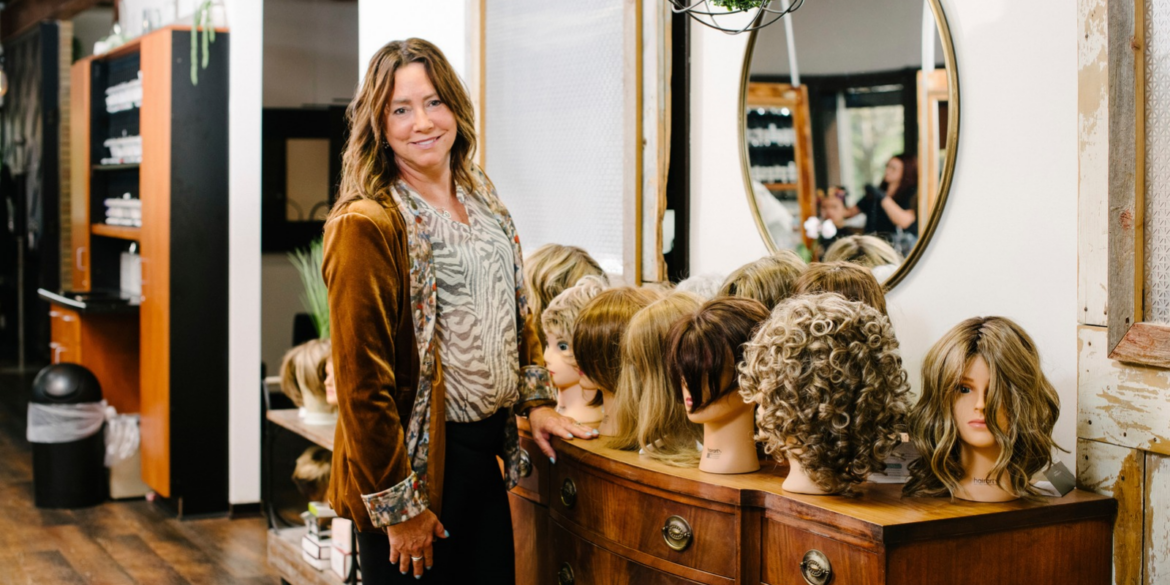
Step inside Julia Grace Salon and you’ll see reclaimed wood doors wall of windows flooding the space with natural light. But if you’re struggling with hair loss, your eye may settle on the rows of wigs — curly, sleek, long, short, brunette, blond and silvery — placed around the salon. Full and partial wigs (often called toppers) are a new focus at the salon, inspired by owner Tabatha Berget-Barnaby’s cancer journey.
In 2022, Berget-Barnaby was diagnosed with invasive lobular carcinoma, a type of breast cancer that had not been discovered in her previous annual mammograms and breast exams. In March of that year, she had a double mastectomy, plus the tumor and nine lymph nodes removed. Next came chemotherapy and 28 rounds of radiation.
When Berget-Barnaby lost her hair during treatment, she opted not to wear a wig. But she heard from many other women who were struggling with hair loss, whether due to cancer, alopecia, thyroid issues or other disorders. They didn’t know where to turn for help, and Berget-Barnaby realized she didn’t either.
“I was lost — and I’m a hairdresser!” she says.
As a beauty professional, Berget- Barnaby deeply understood how personal hair can be, and how alienating and devastating losing it can feel. She decided that as soon as she felt healthy enough, she would learn about hair replacement options and share that knowledge.
In the fall of 2025, she began training, and these days, the salon receives three to five calls a week about wig services.
Women interested in hair replacement book a consultation, during which a stylist measures their head and they can try on wigs and peruse photo books, colors and hair swatches. Prices range from $200 for a simple synthetic-hair wig to $4,000 for a full human-hair wig.
Clients typically receive their wig a week after ordering, and stylists can customize it through cutting and coloring.
The salon also offers complimentary hair-to-scalp transitional haircuts. Berget-Barnaby recalls how difficult it was to cut her hair when it began falling out during chemotherapy, and knows other patients and their loved ones struggle with it too. Berget-Barnaby says interest in wigs is growing in the beauty industry, to accommodate clients facing hair loss and also those who enjoy wearing them to change up their look.
Stylist Leslie Prust appreciates being able to help women go from uncertain to comfortable in wearing a hairpiece.
“At first it’s an adjustment for them, but then they can’t tell it’s a wig,” says Prust.
When women find their right wig, seeing themselves with hair again can be emotional, says stylist Alexis Miller.
“Their eyes light up,” she says. “Some leave in tears.”
It’s exactly these transformations that Berget-Barnaby dreamed of when she was battling her cancer. It’s gratifying to take her experience and turn it into something positive, and powerful, for other women.
“It’s like you change their life,” she says. “They walk out with confidence.”